01 / 10
Why does sheep wool get burned?
Sheep wool gets burned because raw wool in the EU is classed as an animal by-product and often costs more to shear than it sells for. Without collection and processing nearby, it is burned or buried.
Around 200,000 tonnes of sheep wool a year go to waste in Europe, up to 90% of what is shorn.[2][3]
The Nordics produce around 5,900 tonnes of raw wool a year and discard or burn almost 2,400 tonnes. Norway and Iceland collect almost all of it, while Denmark and Finland discard most of theirs. Sweden is now investing to reverse the trend.[1]
The value lost in the Nordics is estimated at around EUR 120 million a year.[1]
It comes down to the system, not the quality of the wool. Regulation (EC) No 1069/2009 classes raw wool as an animal by-product, and the Nordics lack shared wool grading, collection points and the capacity to scour and process the wool.[4][1]
The figures above describe the problem, not Byeco's raw material. According to the manufacturer's EPD, the wool in Byeco's range is reject wool from sheep kept for milk and cheese, mostly from Austria, Spain, Germany, the Netherlands and France, and the scouring plant charges for it.
- of sheep wool go to waste in Europe, up to 90% of what is shorn
- 200,000 t/year
- are discarded or burned in the Nordics, out of around 5,900 tonnes of raw wool
- 2,400 t/year
- in value lost in the Nordics
- 120 MEUR/year
02 / 10
What makes sheep wool a good insulation material?
Sheep wool insulates with a declared λD of 0.036–0.043 W/(m·K) to ETA-07/0214, and according to the manufacturer's EPD the wool can take up moisture equal to as much as 33% of its own weight without losing insulating performance.
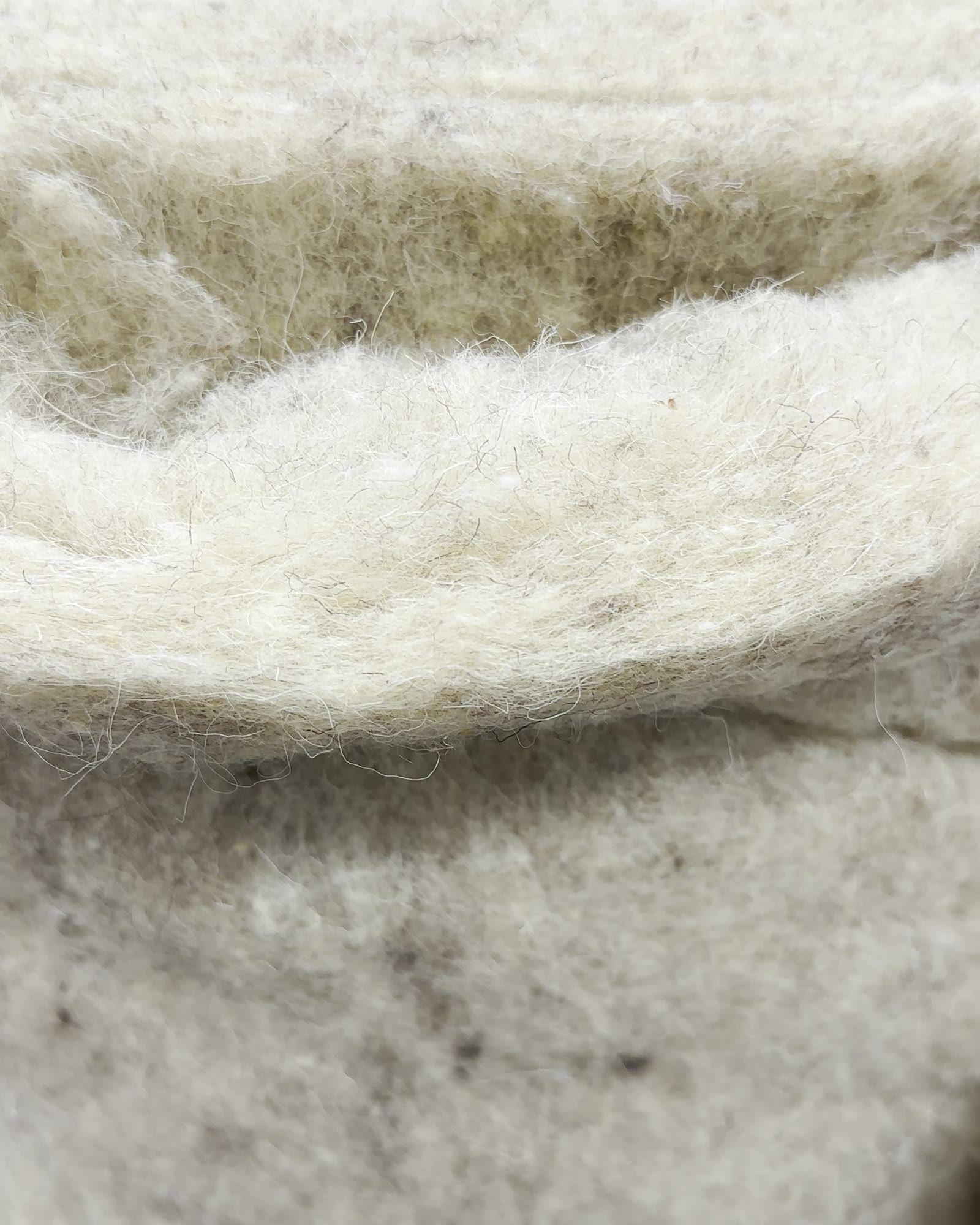
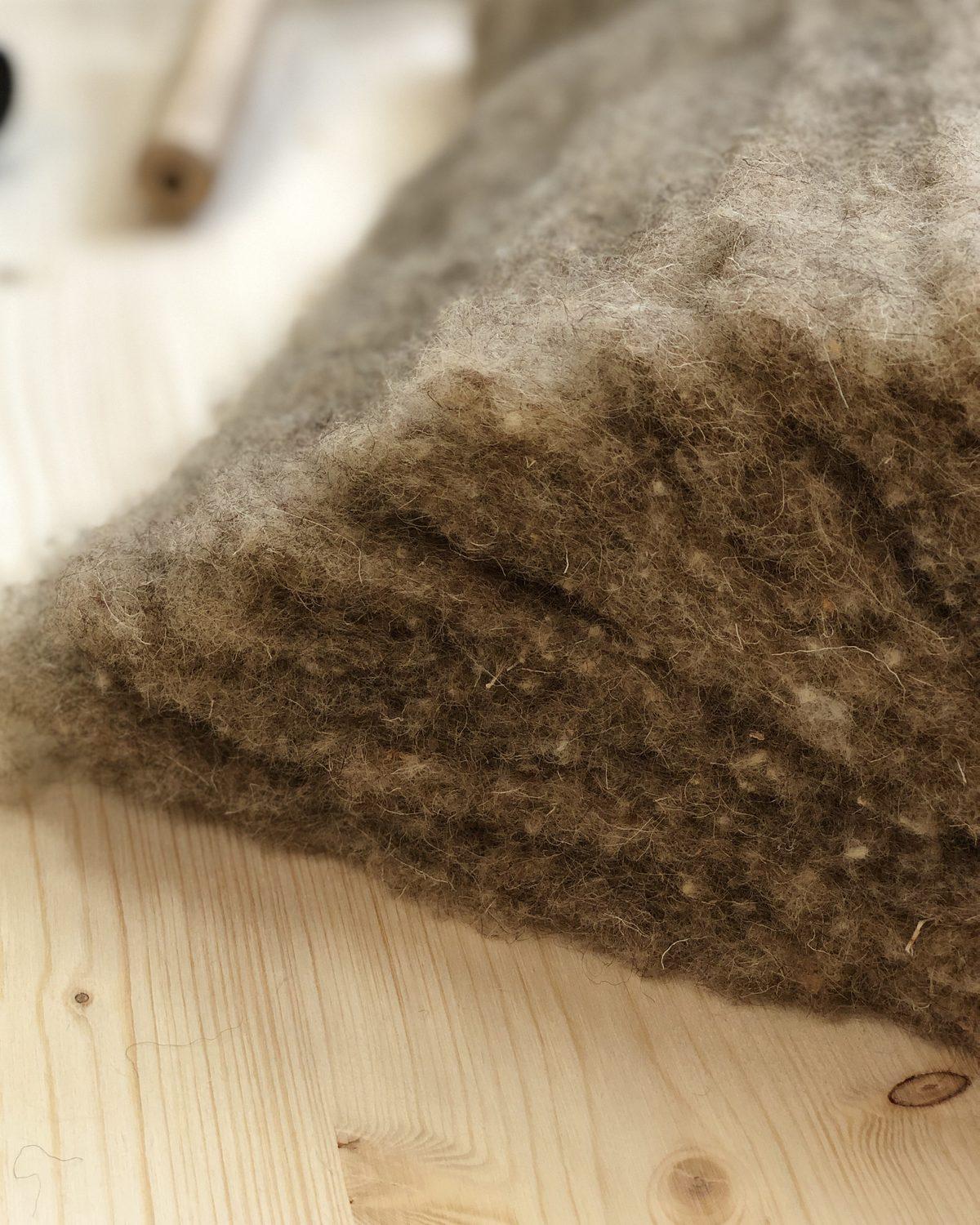
The fibre is crimped, and it is the still air between the fibres that insulates. Keratin binds water vapour, so the wool buffers moisture instead of shutting it out.
At μ = 1 the layer is fully vapour-open. The assembly can dry in whichever direction is open, and that is often a requirement when older buildings are renovated.
Wool gives off heat as it takes up water vapour, known as heat of sorption, and absorbs heat again as it dries. How much that matters in a wall depends on the build-up and the climate.[5]
Thermal conductivity λD
- Value
- 0.036–0.043 W/(m·K)
- Source
- ETA-07/0214, section 3.5.1
Water vapour diffusion resistance factor μ
- Value
- 1
- Source
- EPD
Moisture uptake
- Value
- up to 33% of own weight
- Source
- EPD, manufacturer's description
Mould resistance
- Value
- Class 0, long-term test
- Source
- EPD
Density
- Value
- 18–100 kg/m³
- Source
- Data sheets
| Property | Value | Source |
|---|---|---|
| Thermal conductivity λD | 0.036–0.043 W/(m·K) | ETA-07/0214, section 3.5.1 |
| Water vapour diffusion resistance factor μ | 1 | EPD |
| Moisture uptake | up to 33% of own weight | EPD, manufacturer's description |
| Mould resistance | Class 0, long-term test | EPD |
| Density | 18–100 kg/m³ | Data sheets |
The air insulates
λD 0.036–0.043W/(m·K) to ETA-07/0214
It is the still air between the crimped fibres that insulates.
Vapour passes through
μ = 1
Water vapour passes as easily as through still air, and the assembly can dry in whichever direction is open.
Moisture is bound in the fibre
up to 33%of its own weight
Keratin binds water vapour without the wool losing its insulating performance, and the fibre gives off heat as it does.
The raw material
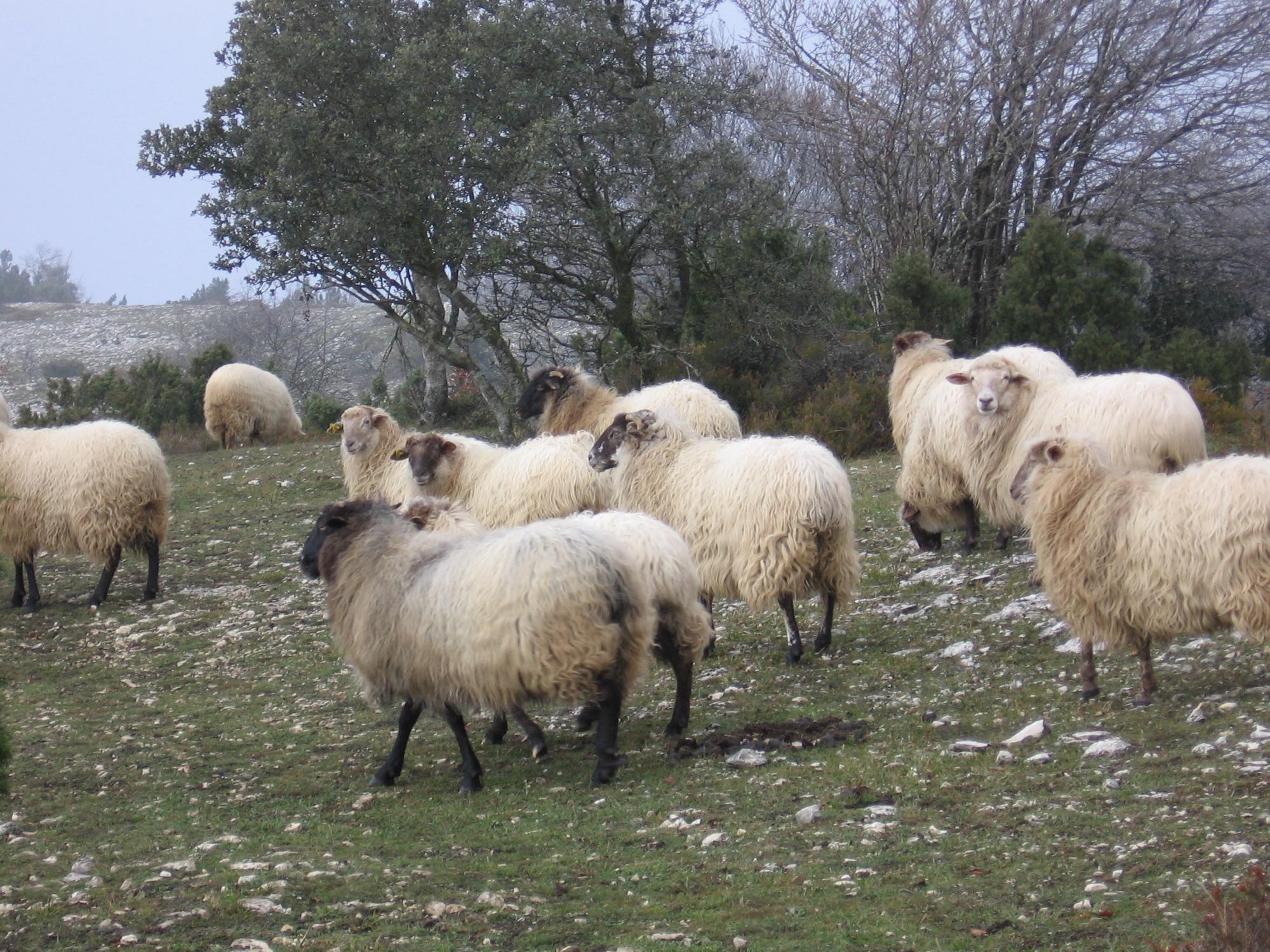
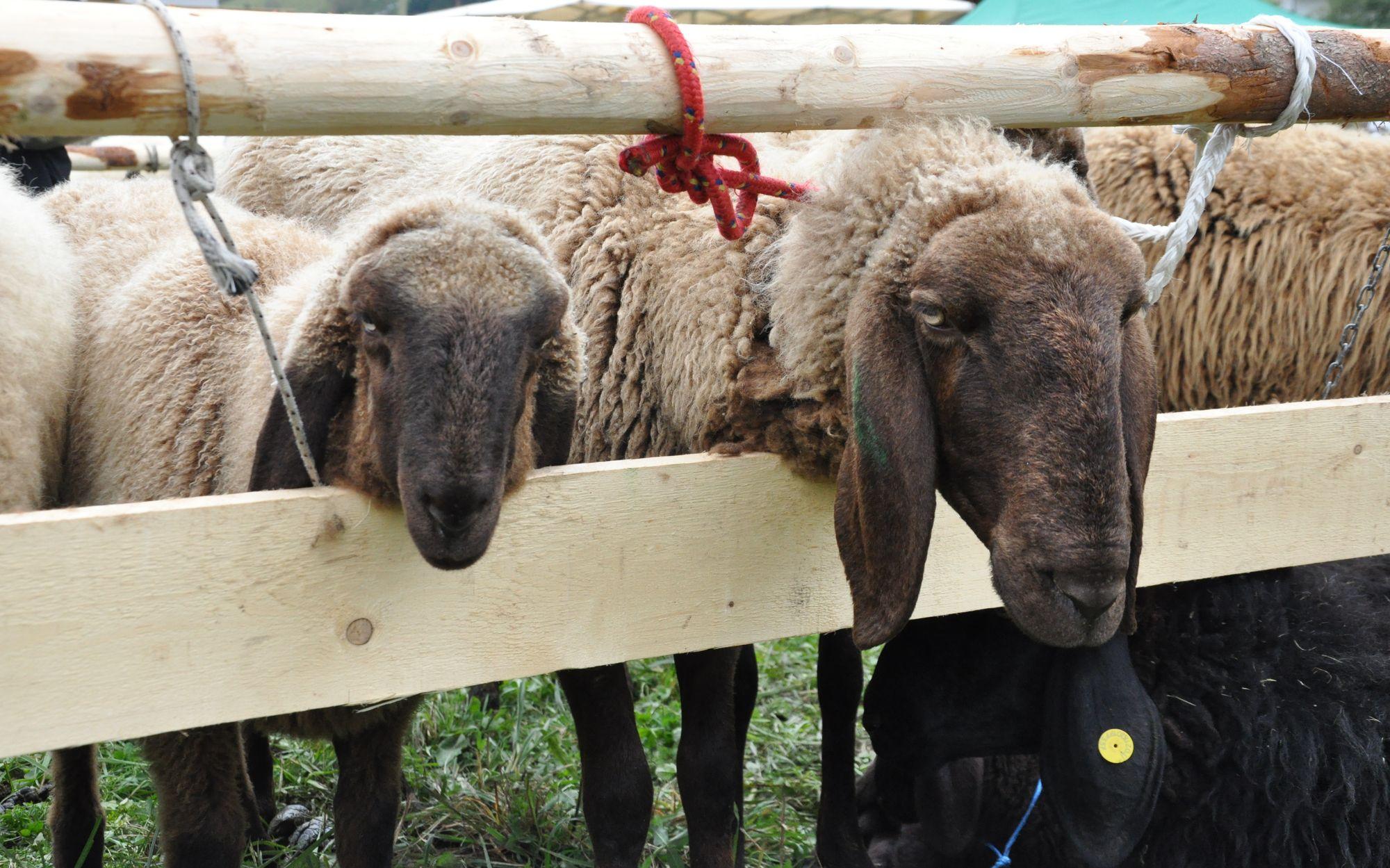
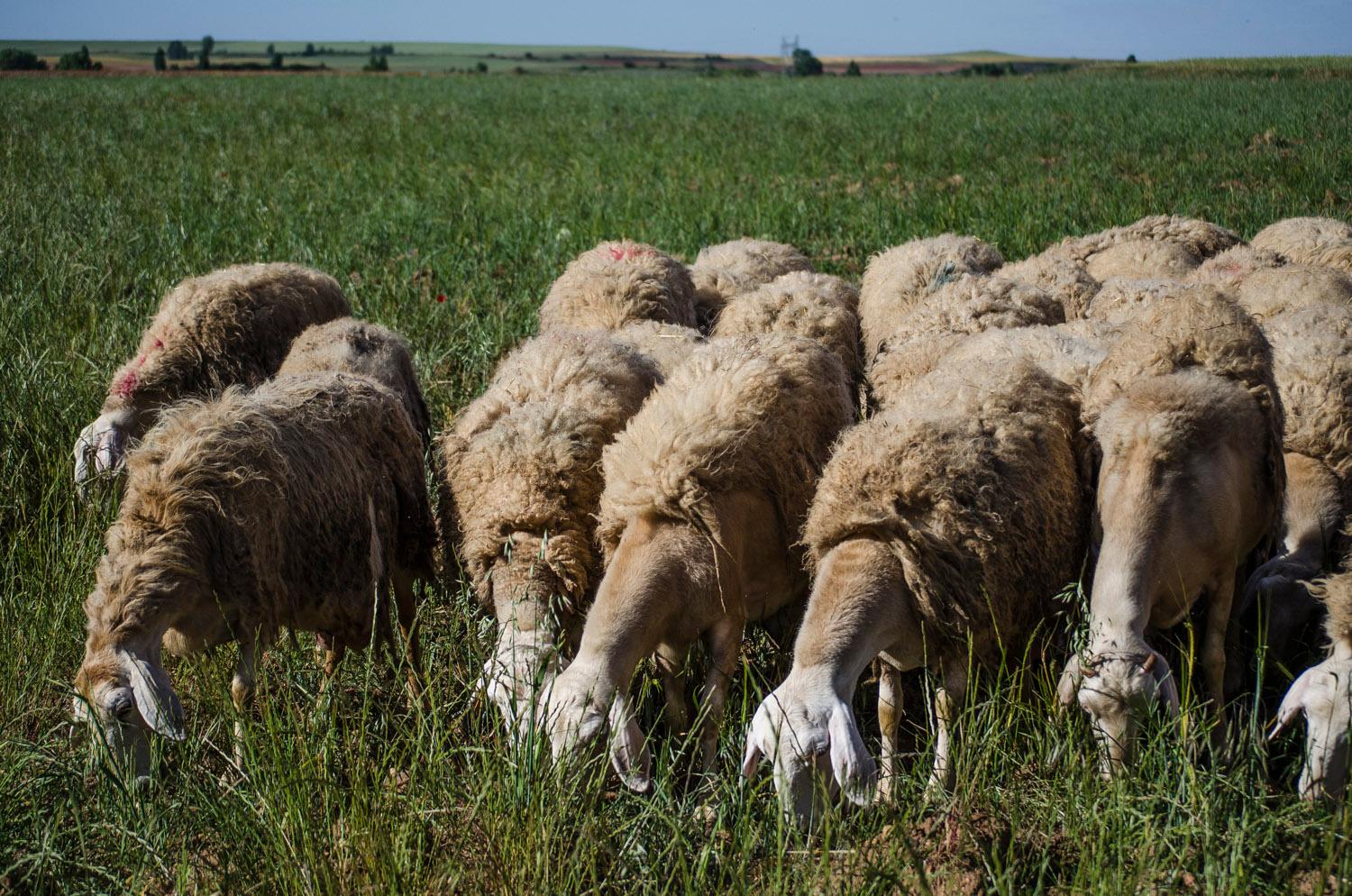
The fibre grows on a sheep.
According to the manufacturer's EPD for the insulation and the felt, the wool is reject wool from sheep kept for milk and cheese, mostly from Austria, Spain, Germany, the Netherlands and France. It is not Nordic wool.


03 / 10
What is in the sheep wool insulation?
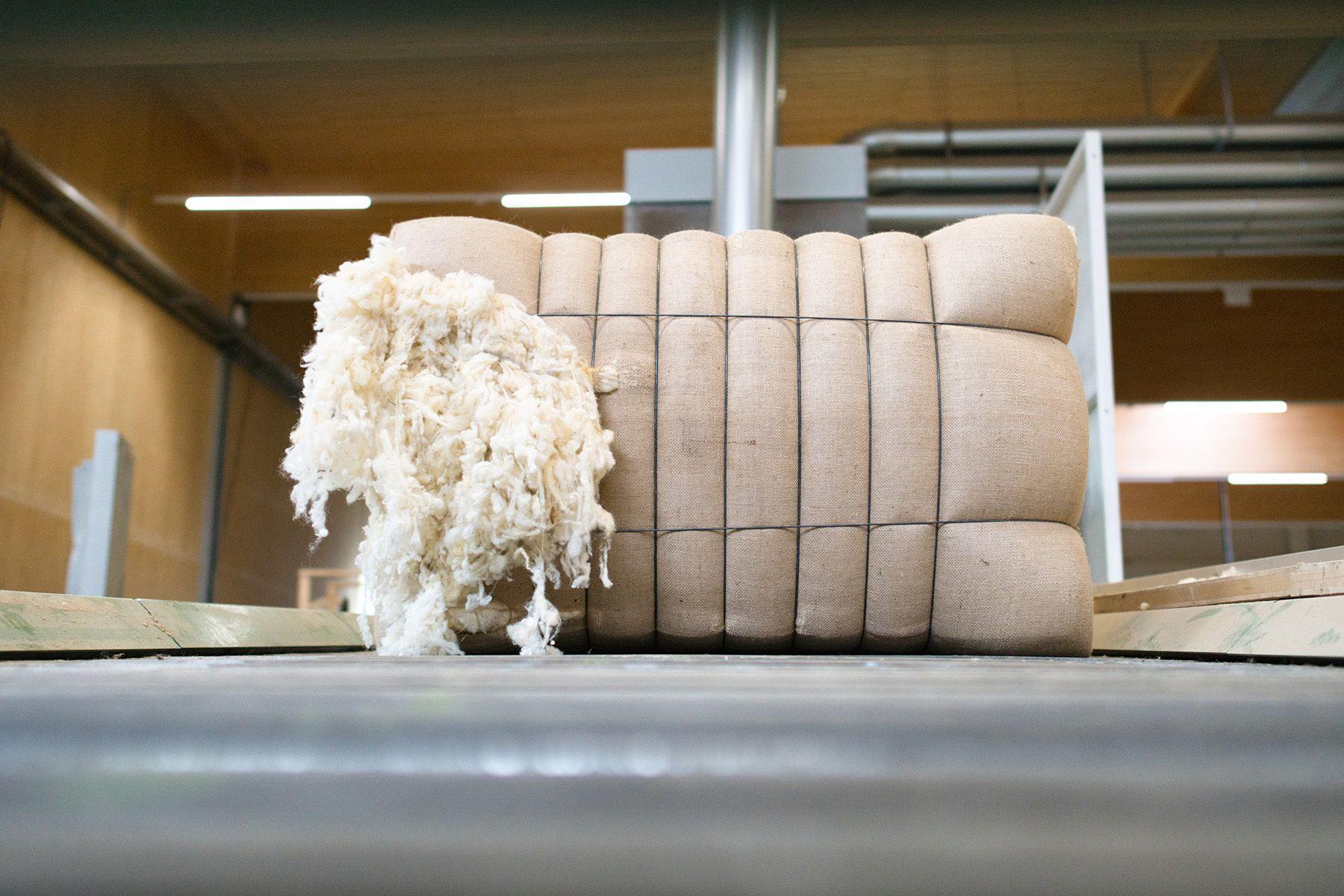
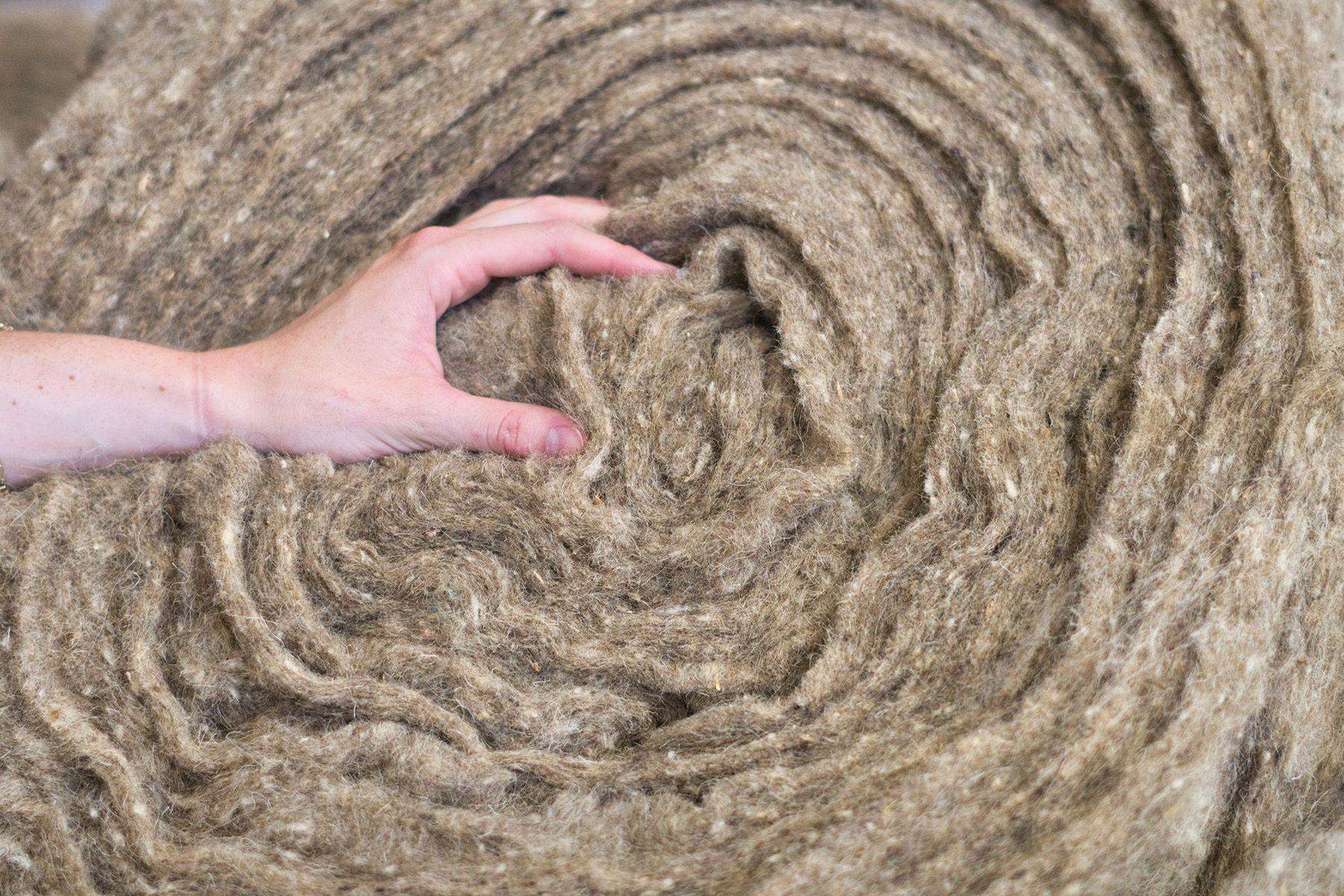
According to the manufacturer's Environmental Product Declaration, the insulation is 100% sheep wool, with no glue or synthetic support fibres. The floor underlay has kraft paper on its top side.
Some sheep wool insulation is blended with polyester fibres that hold the batt together. Check the composition on the data sheet when comparing products.
The data sheets state that the insulation contains no borates toxic to reproduction.
The insulation contains no formaldehyde resin. Product passport SHI 2287-10-1002 requires formaldehyde emission of no more than 24 µg/m³, a limit rather than a measured value.
In a ventilated chamber test the formaldehyde level was 68–69% lower with a sheep wool mat in the chamber, measured on days 1, 3 and 7. The test was on a different wool mat from Byeco's and does not show how long the effect lasts.[6]
The wool is treated against moths with Ionic Protect®, which the manufacturer declares biocide-free.
04 / 10
How well does sheep wool absorb sound?
Sheep wool is a porous material that absorbs sound. Airflow resistivity for the insulation and the felt is 4.1–29.5 (kPa·s)/m² to EN 29053.
Denser packing raises airflow resistivity and absorption for a given thickness. That is why the range comes in several densities.
We give αw for two products from ETA-07/0214, measured to EN ISO 354 with mounting type A at 50 mm: Byeco Standard ++ 0.75 and Byeco Ultra +++++ 0.85. The value holds only for the thickness and mounting tested.
The felts' data sheets give αw to EN ISO 11654: Byeco Sheep Wool Felt 0.30 and Byeco Acoustic Felt 0.30, at 9 mm. The sheets do not state how the felt was mounted in the test.
The manufacturer gives no αw for Byeco Plus +++, Byeco Pro ++++ and Byeco Floor Underlay. For Byeco Pro ++++ there are only values for tested acoustic ceilings, and they apply to the whole ceiling, not the wool alone.
Sound insulation is not the same as absorption: in a double-boarded single-stud wall (Knauf W112) with 80 mm Byeco Standard ++ the sound reduction index is Rw 54 dB according to the data sheet (EN ISO 717-1). The value applies to the whole wall, not the wool alone.
Absorption in the room
αw 0.75–0.85at 50 mm
The wool takes up sound that strikes it, so less bounces back into the room.
Sound insulation through the wall
Rw 54 dB
The wall as a whole reduces sound between rooms. The figure is for a tested wall with 80 mm of wool, not the wool alone.
05 / 10
What fire class does sheep wool have?
Sheep wool is combustible. The highest fire class in the range is C-s2, d0 to EN 13501-1, and the insulation sits at D-s2, d0.
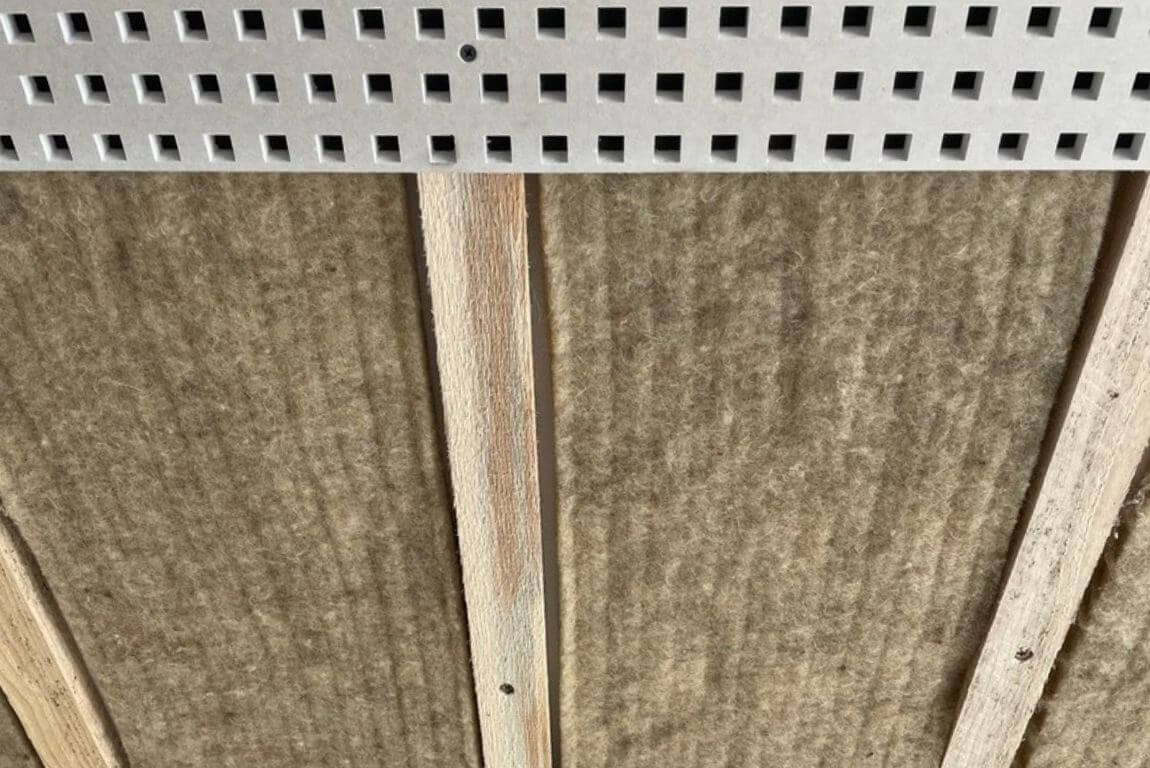
The manufacturer's data sheet gives B-s1, d0 only for one tested ceiling build-up: a 12 mm perforated acoustic ceiling panel backed with 40 mm Byeco Standard ++ (18 kg/m³) and a 60 mm air gap. If the assembly requires B-s1, d0 in any other build-up, or a non-combustible material, sheep wool is the wrong choice. We would rather say so now than after the mock-up.
The insulation and the felt are d0: no flaming droplets in the fire test.
The classes for the insulation and the felt are in two classification reports the manufacturer publishes: B24219 for the insulation and B24218 for the felt, issued in 2024 by Holzforschung München (TU München). They cover about 30 mm of insulation and 9 mm of felt respectively, directly on a non-combustible substrate, indoors and uncoated. Other thicknesses, substrates and air gaps are not covered.
The wool can be part of a fire-separating wall: the data sheet gives EI 90 (EN 13501-2) for a non-load-bearing double-stud wall (Knauf W115) with 2 × 12.5 mm fire-rated plasterboard (GKF) per side and 2 × 50 mm Byeco Standard ++. The class applies to the whole wall, not the wool alone.
- Felt and stripsC-s2, d0Classification report B24218, at approx. 9 mm and 100 kg/m³. The class applies directly on a non-combustible substrate, indoors and uncoated. Other thicknesses, substrates and air gaps are not covered.
- InsulationD-s2, d0Classification report B24219, at approx. 27–33 mm and 18–31 kg/m³. The class applies directly on a non-combustible substrate, indoors and uncoated. Other thicknesses, substrates and air gaps are not covered.
- System: Tested ceiling build-upB-s1, d0
06 / 10
What is the climate impact of sheep wool insulation?
The fossil climate impact of sheep wool insulation is +0.727 kg CO₂e per kilogram in modules A1–A3, and the net over the full life cycle, A1–C4, is +1.12 kg CO₂e per kilogram, according to the Environmental Product Declaration BAU-EPD-Isolena-2025-1-Ecoinvent.
Counting biogenic carbon, A1–A3 comes to -0.83 kg CO₂e per kilogram: a biogenic uptake of -1.565 and a fossil burden of +0.727. That carbon is released again when the material is incinerated after use, which is the scenario in the declaration (module C3). The negative figure therefore covers production only.
In the declared unit, 1 m³ · 23.26 kg/m³, the fibre stores 9.94 kg of biogenic carbon, equal to around 36 kg of CO₂, for as long as the material stays in the building.
A Swedish climate declaration counts A1–A3 without biogenic carbon, that is around 0.73 kg CO₂e per kilogram.
According to the manufacturer's EPD the insulation can be reused if it is removed undamaged. The climate figures above still assume incineration with energy recovery, because the EPD rules require that scenario.
Climate impact
Per kilogram of wool, in kg CO₂e. Minus is uptake, plus is emission.
- Production, fossil emissionsA1–A3
+0.727
- Biogenic carbon stored in the fibreA1–A39.94 kg of carbon per m³ of wool
−1.565
- Net at the factory gateThe sum of the fossil emissions and the stored carbon, plus 0.008 for land use (GWP-luluc).A1–A3
−0.83
- Full life cycleTransport, installation and end of life (A4–C4) add +1.95.A1–C4The carbon in the fibre is released again when the wool is incinerated (C3).
+1.12
In a Swedish climate declaration, A1–A3 is counted without biogenic carbon.
Declaration
- Value
- BAU-EPD-Isolena-2025-1-Ecoinvent
- Source
- Bau-EPD GmbH
Standard
- Value
- EN 15804+A2
- Source
- EPD
Valid until
- Value
- 2030-05-12
- Source
- EPD
Reference service life
- Value
- 50 years (default value)
- Source
- EPD
| Item | Value | Source |
|---|---|---|
| Declaration | BAU-EPD-Isolena-2025-1-Ecoinvent | Bau-EPD GmbH |
| Standard | EN 15804+A2 | EPD |
| Valid until | 2030-05-12 | EPD |
| Reference service life | 50 years (default value) | EPD |
07 / 10
What should you know about emissions and fitting of sheep wool?
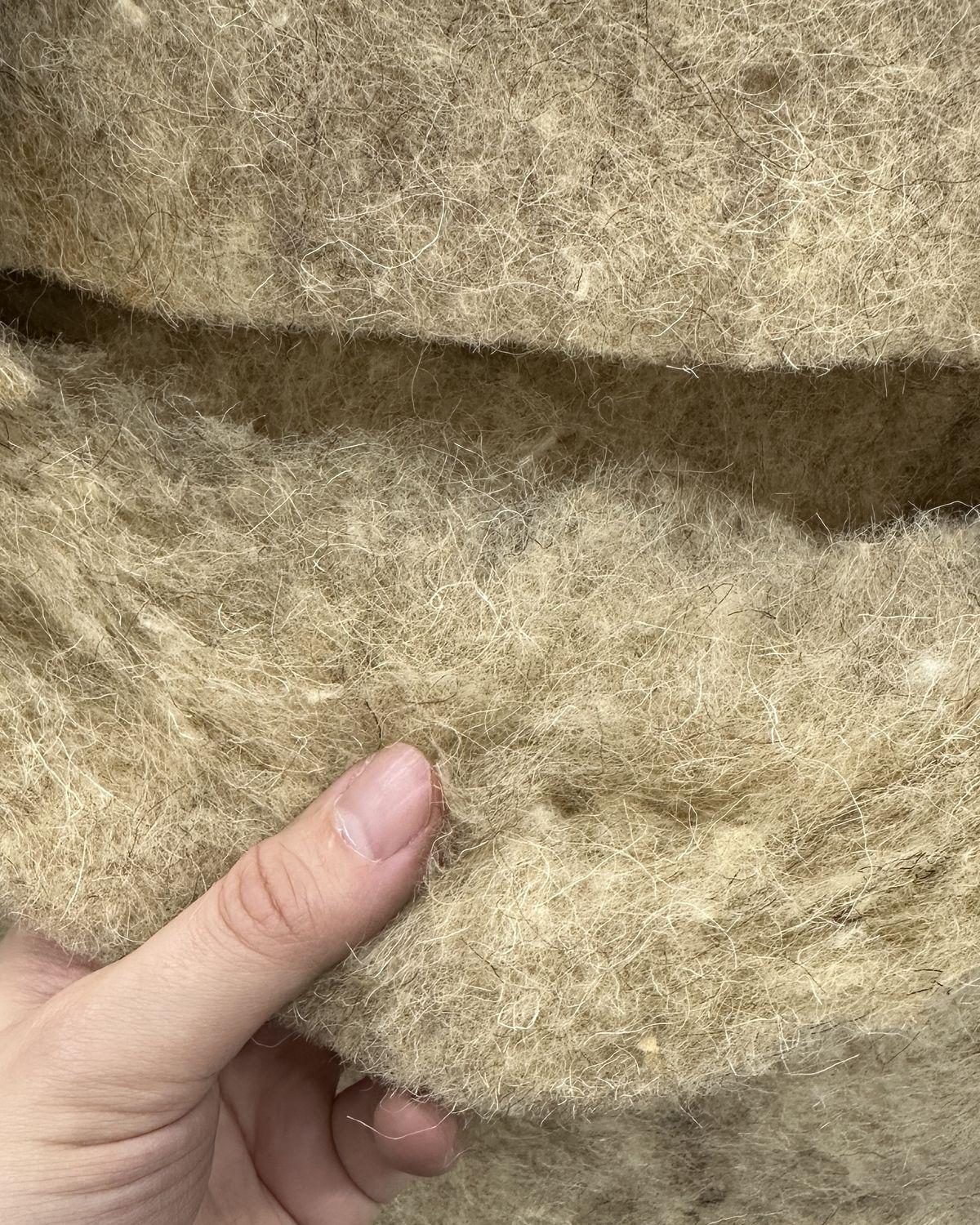
The sheep wool insulation and Byeco Sheep Wool Felt are certified to natureplus®, which sets limits on emissions and content. According to the manufacturer's EPD the wool is cut to length by hand without tools and, in a pitched roof, tacked to the rafters at the sides. The insulation can be fitted without protective clothing or a dust mask: the wool has no fibres fine enough to be breathed in, but shorter fibres from cut edges can come loose during fitting.
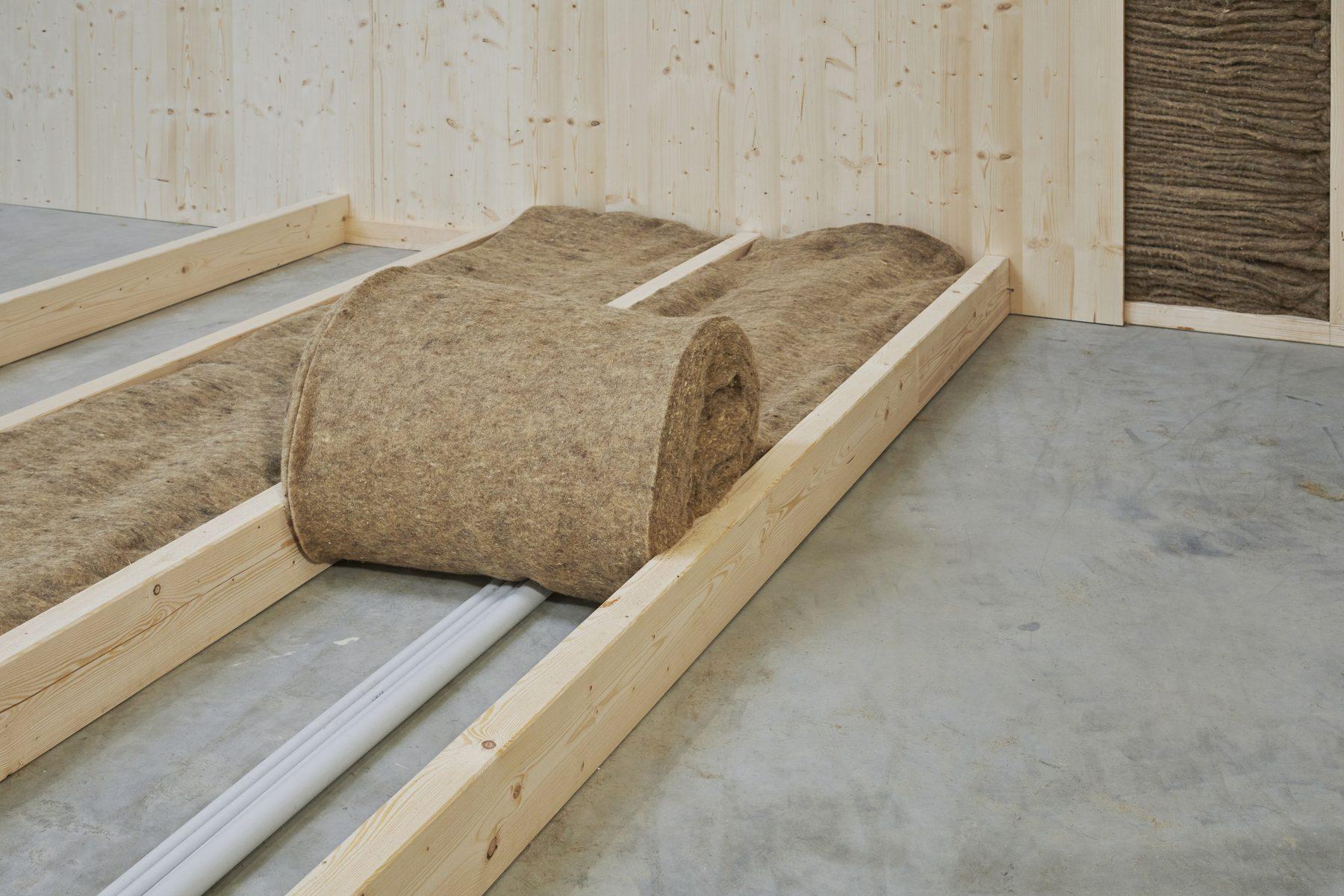
The mat is needle-punched. According to the manufacturer's EPD this makes it stable enough not to settle, provided it is installed correctly. On steel studs it is fixed to the rear lining with a mounting aid.
The natureplus certificate is not an M1 declaration, and we do not present it as one. The manufacturer publishes neither an M1 class nor an emissions report to AgBB.
The wool is treated with Ionic Protect® against moths, and a long-term test to EAD is published. How the treatment works is for the manufacturer to describe, not us.
08 / 10
Does sheep wool last?
The Environmental Product Declaration for the sheep wool insulation gives a reference service life of 50 years, which is a default value for insulation rather than a tested service life. The manufacturer also declares Class 0 in long-term testing against mould growth.
According to the manufacturer's EPD, the wool can take up moisture equal to as much as 33% of its own weight without losing insulating performance.
After a leak the rule is the same as for any insulation: fix the cause, then dry out or replace the layer.
According to the manufacturer's EPD the wool can be kept in a storeroom with no time limit.
09 / 10
What does sheep wool cost compared with mineral wool?
Sheep wool costs more per square metre than mineral wool to buy, and we would rather say so up front.
Base the calculation on the whole finished build-up and compare declared values product by product, using each product's EPD and Declaration of Performance.
Standard products are priced in the shop. Larger project and industrial volumes are quoted.
Supply chain
From dairy sheep to pallet.
According to the manufacturer's Environmental Product Declaration for the insulation and the wool felt, the wool is reject wool from sheep kept for milk and cheese. Most of it comes from Austria, Spain, Germany, the Netherlands and France. ISOLENA processes it in Austria; we stock it in Sweden.
5 steps
01 / 05
Dairy sheep
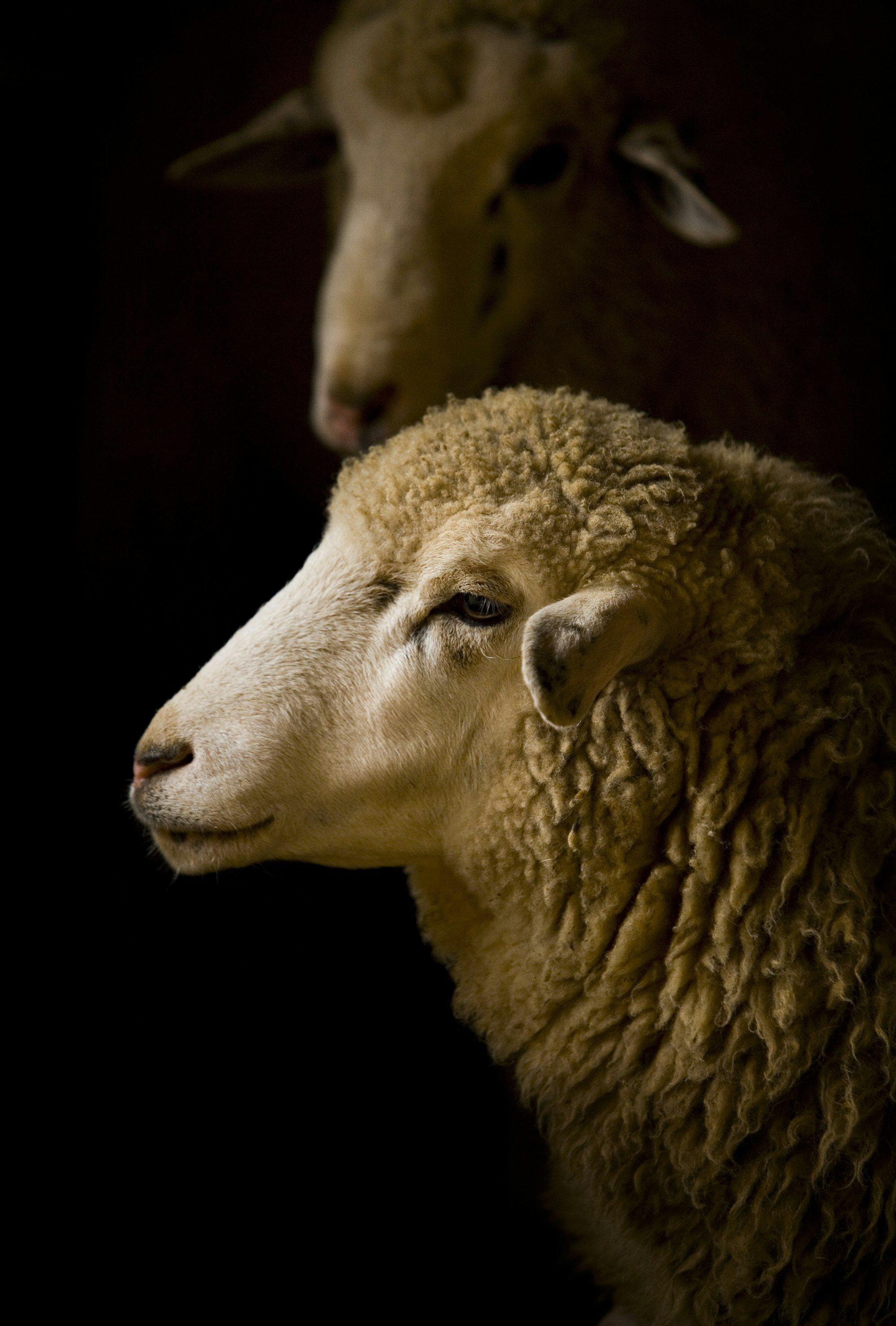
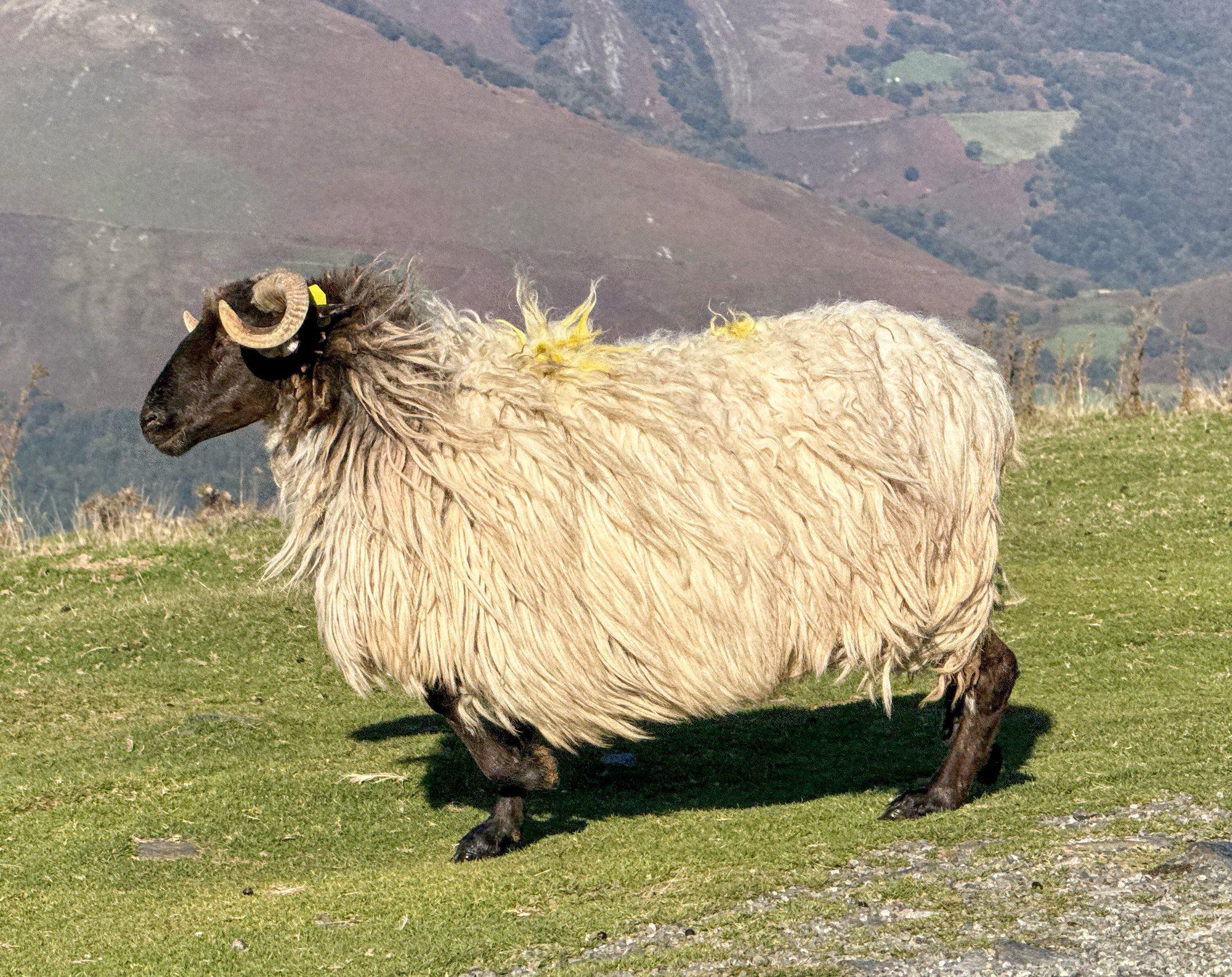
According to the EPD, the wool comes from sheep kept for milk and cheese. They are shorn once or twice a year.
Manech tête noire, a Basque dairy breed, in the Pyrenees. Illustration, not a supplier of our wool. Photo: Hayden Soloviev, CC BY 4.0, cropped.
Mainly fromAustria, Spain, Germany, the Netherlands and France
02 / 05
Reject wool
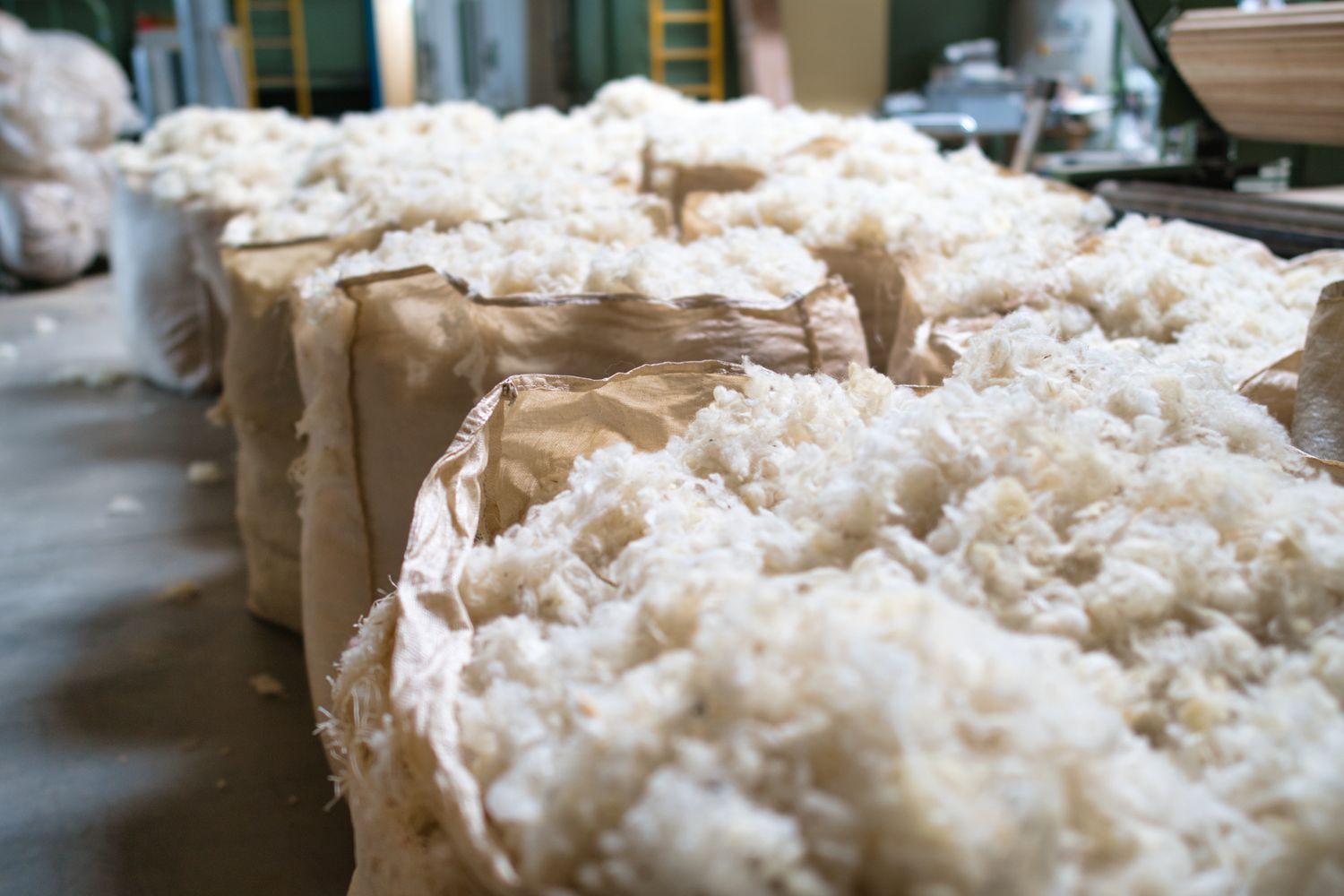
It is the reject wool that is used, not the higher grade. It is collected, washed with water and soda and pressed into bales.
45 %of the weight is lost in washing
03 / 05
Processed in Austria
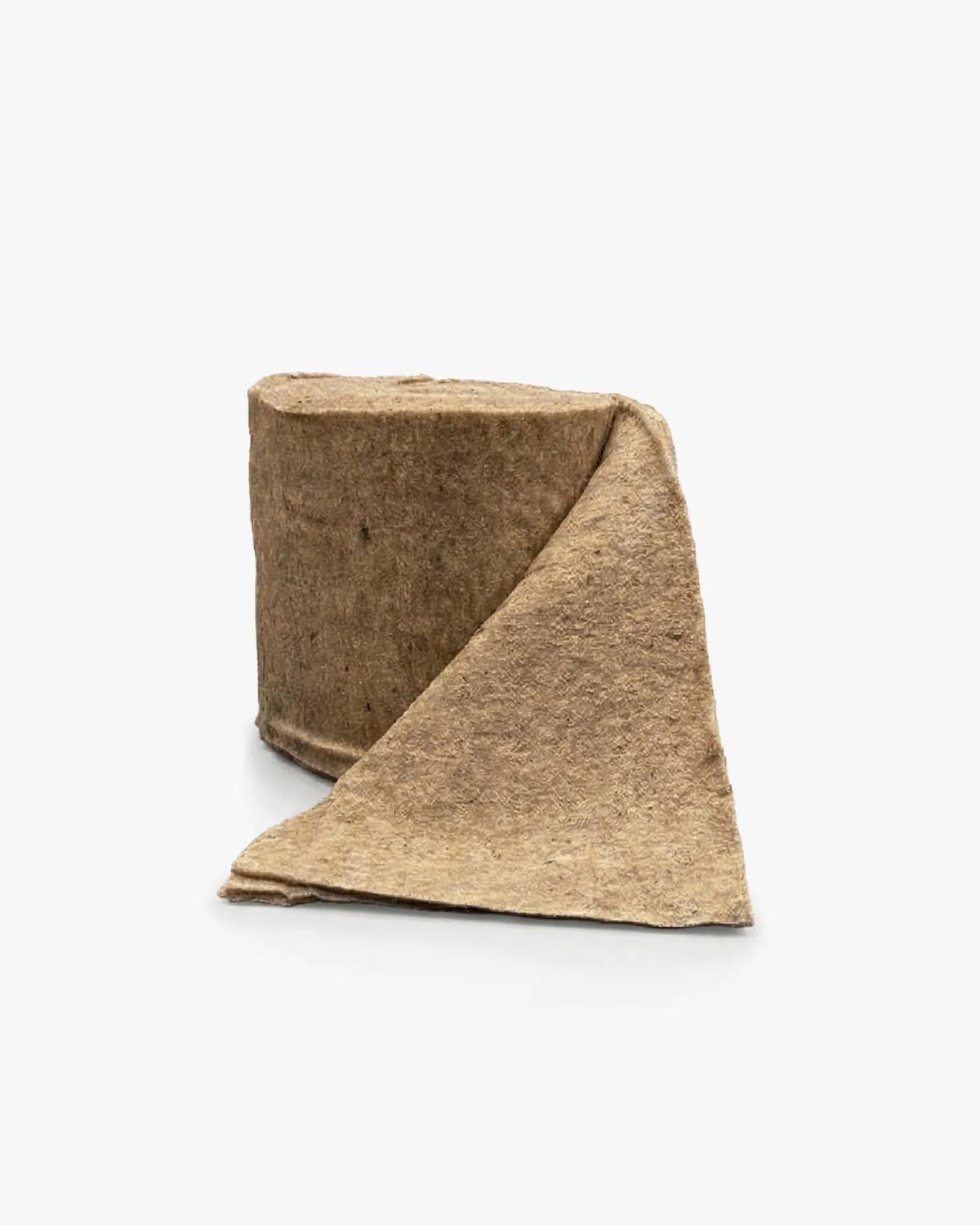
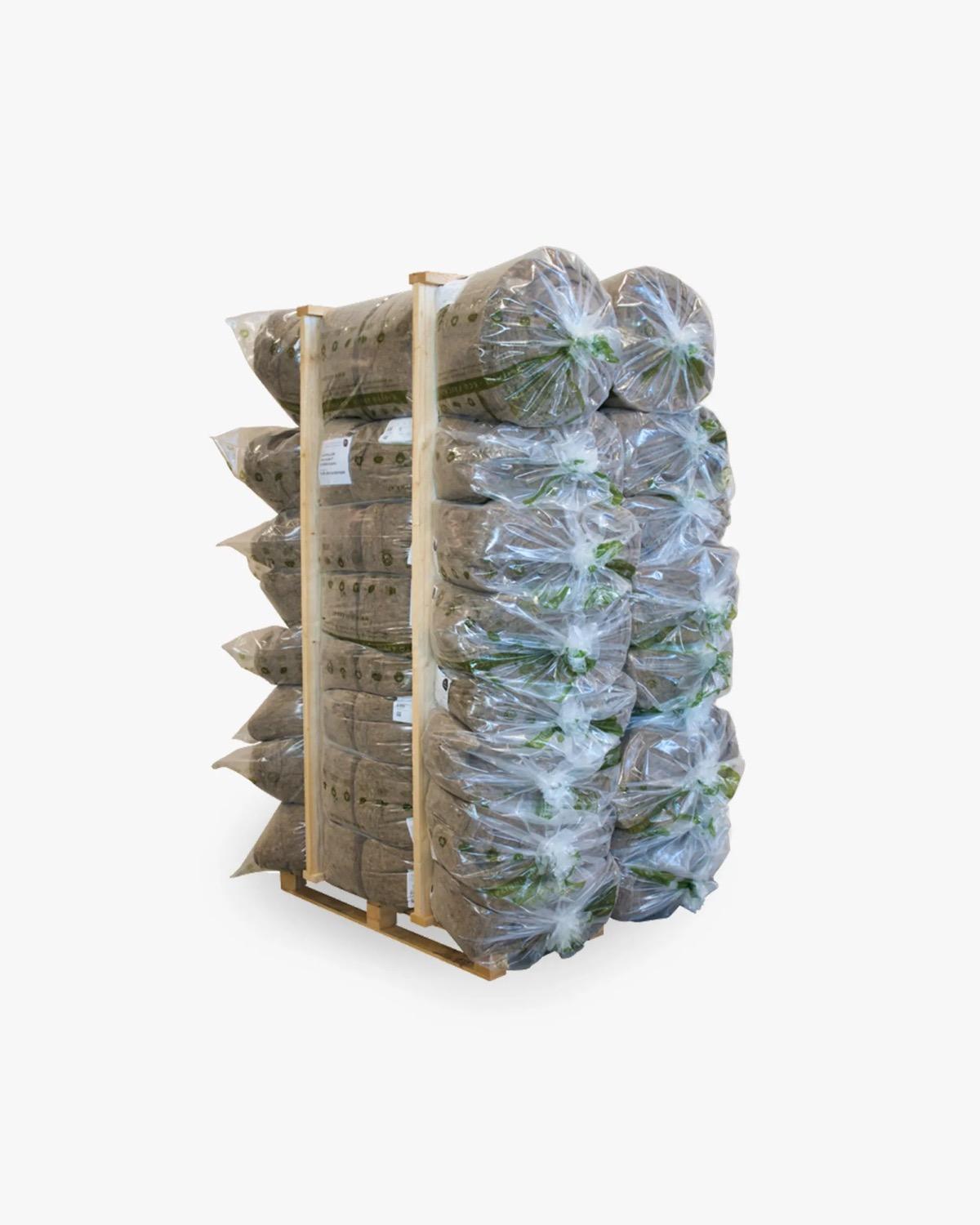
At the plant in Waizenkirchen the wool is carded and needle-punched into rolls and felt, without adhesives or support fibres. It is then cut and packed on pallets.
18–100 kg/m³density in the EPD
05 / 05
Delivery
Byeco cuts the sheep wool to the shape and dimensions you want, priced by quotation. Delivery in the Nordics.

Source for steps 1–3: the manufacturer's Environmental Product Declaration BAU-EPD-Isolena-2025-1-Ecoinvent, sections 2.1, 2.6, 3.2 and 3.9 (data from 2022–2023). It covers Optimal, Premium, Optimal Plus, Klemmfilz, loose wool, joint tape and wool felt. For the other products, we have no documentation of origin. The sheep photos are illustrations, not ISOLENA's suppliers.
10 / 10
Which sheep wool does Byeco sell?
Byeco sells 100% sheep wool in 7 grades, 18–100 kg/m³, as insulation and acoustic material to industry and construction in the Nordics. The floor underlay has kraft paper on its top side.
The material is made in Austria and held in stock in Sweden. The documentation ships with the material.